The science
Light, explained without the hype
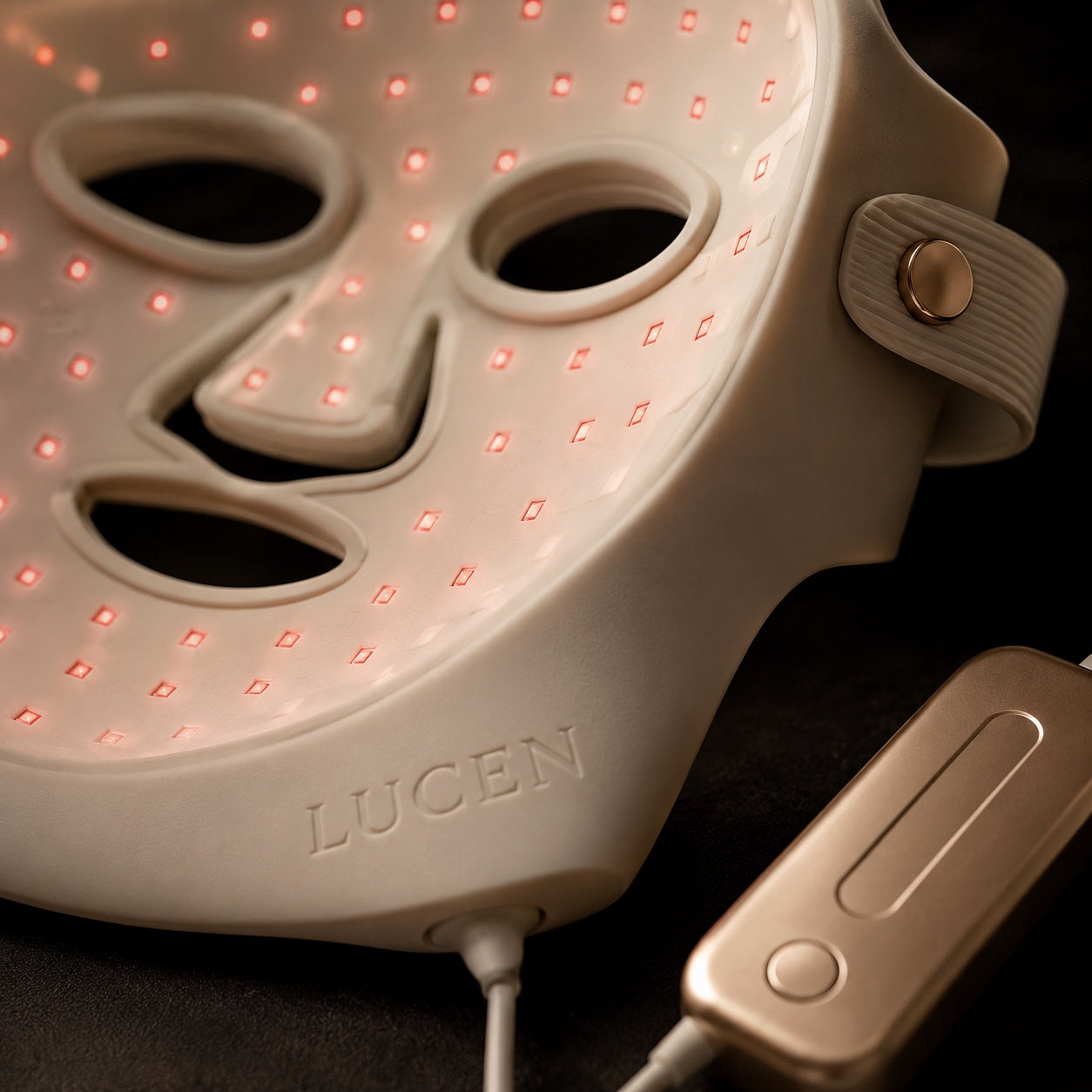
Red light therapy (photobiomodulation) has been studied for decades — the earliest work traces back to NASA-funded research on light and tissue. Two wavelengths matter most for skin appearance, and the LUCEN Halo uses both.
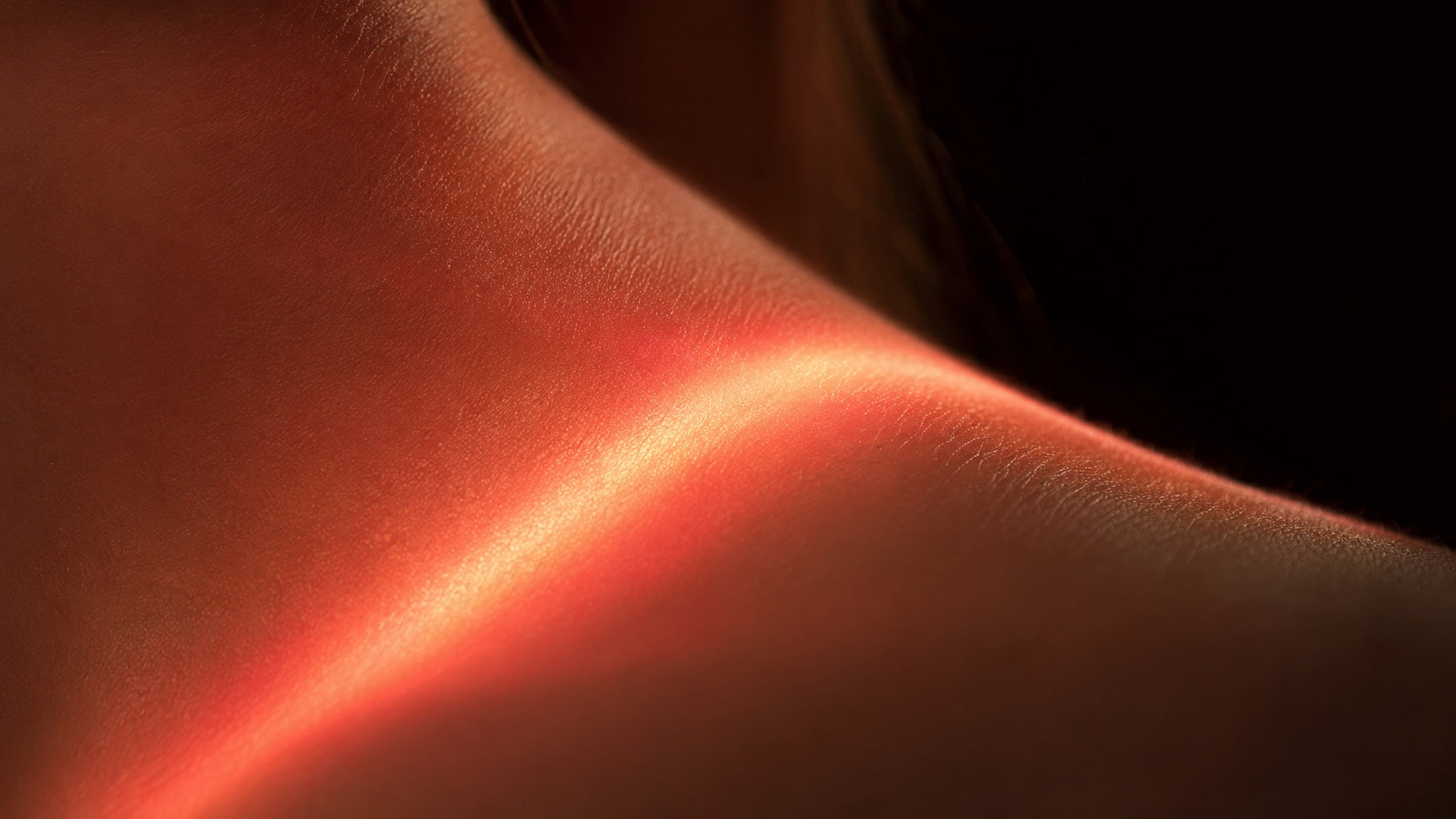
633nm — visible red
Red light is absorbed in the upper layers of skin. In clinical studies of LED devices at this wavelength, participants reported improvements in the appearance of fine lines, firmness, and overall tone over 8–12 weeks of consistent use.
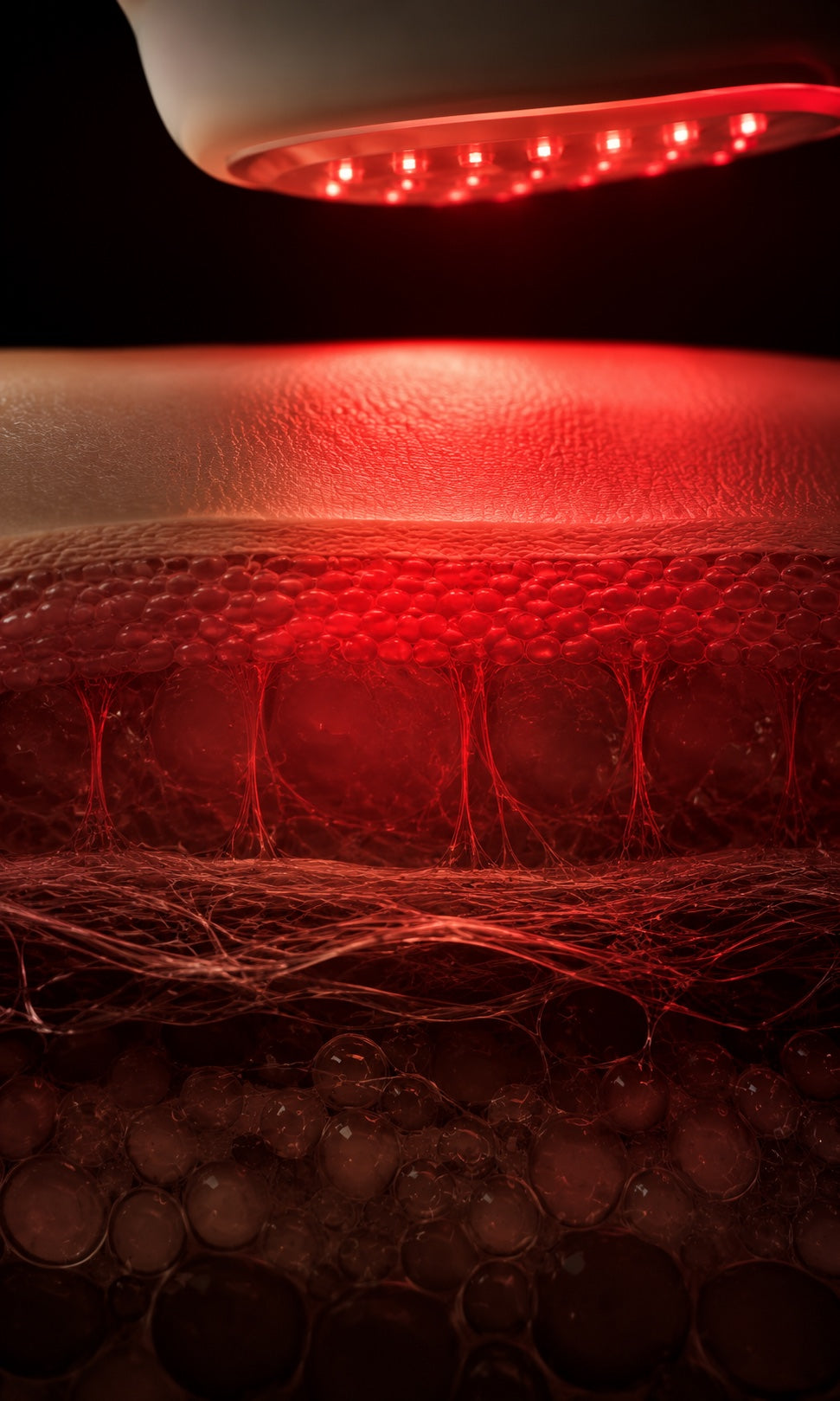
830nm — near-infrared
Near-infrared light is invisible to the eye and reaches deeper than visible red. It's the wavelength most studied for supporting the skin's natural recovery processes.
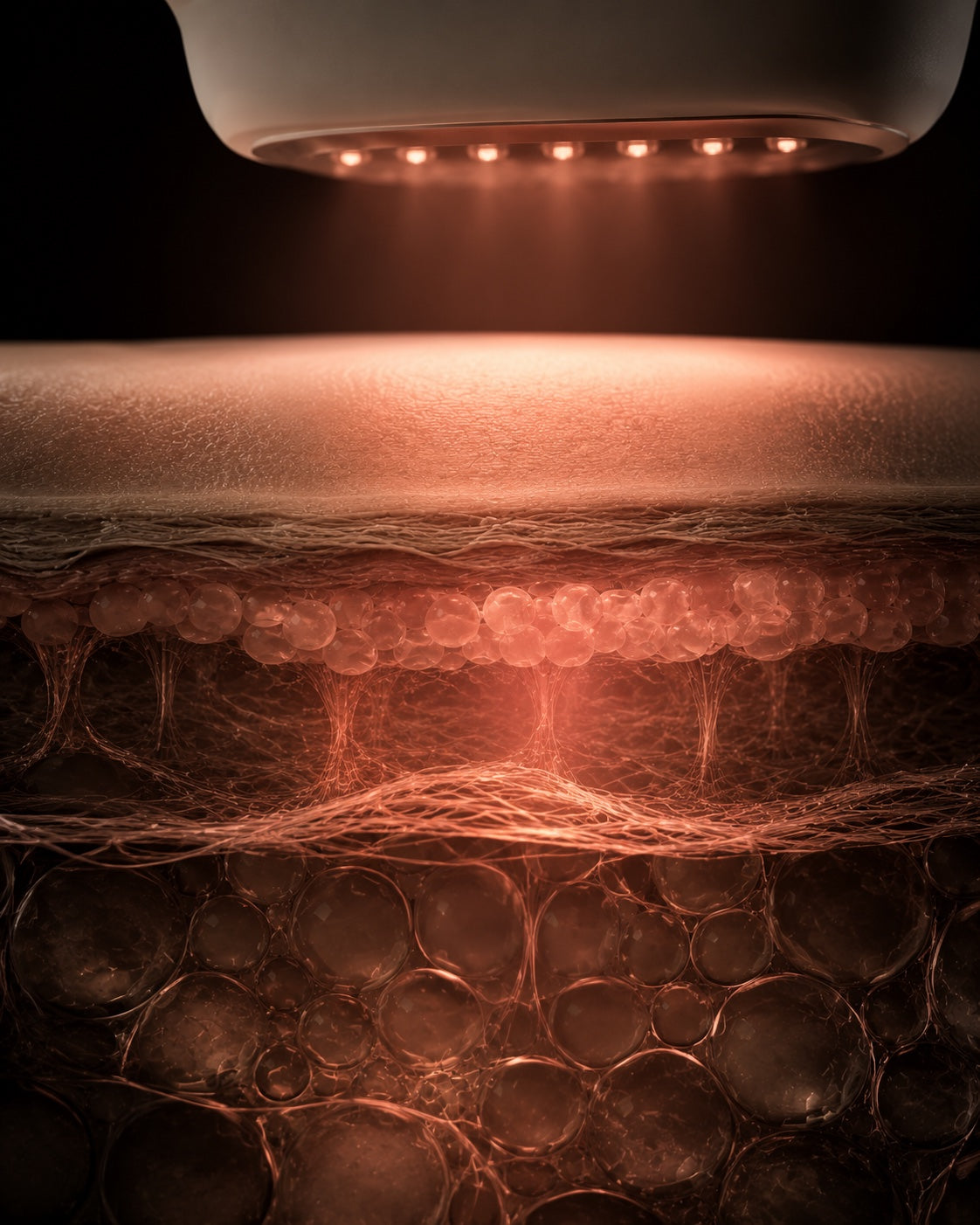
Why irradiance matters
Irradiance is the power your skin actually receives (mW/cm²). It's the spec cheap masks don't publish — because low-power LEDs produce a glow, not a result. The Halo delivers ≥30 mW/cm² at skin contact, and we publish that number because it's the one that matters.
What to expect
Skin renews on a multi-week cycle. Most users notice subtle changes around week 4 and clearer ones by week 8 — which is exactly why our guarantee runs 60 days, not 14.
LUCEN devices are cosmetic wellness devices, not medical devices. Statements on this page relate to the appearance of skin and have not been evaluated by the FDA. If you are pregnant, photosensitive, or taking photosensitizing medication, consult your doctor before use.